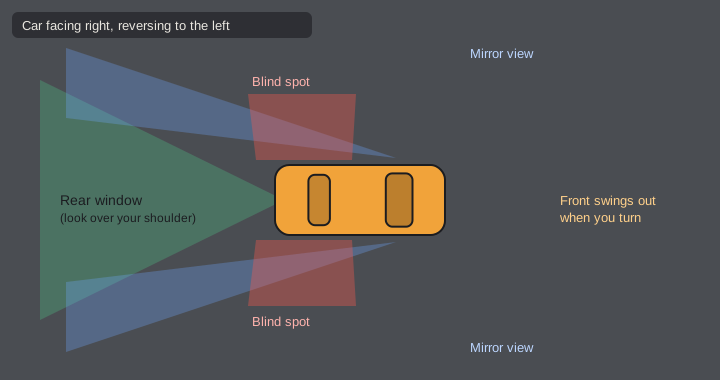
When reversing, look mainly through the rear window by turning in your seat towards the direction the car is moving, and use the side mirrors for quick checks of each side. Before you start and regularly during the manoeuvre, look all around, including your blind spots, because pedestrians and cyclists can appear anywhere. Relying only on mirrors or a camera is a common cause of observation faults.
Key takeaways
- Your main view is through the rear window, over your shoulder.
- Mirrors show narrow strips; use them for quick side checks.
- Check blind spots before moving and throughout.
- Remember the front swing: look forwards too when you turn.
- If someone approaches, stop and let them pass.
The all-round check before you reverse
Before the car moves, check all around: both side mirrors, the interior mirror, both blind spots over your shoulders and the road ahead. Pedestrians, children and cyclists are easy to miss behind and beside a car.
What is a blind spot?
A blind spot is an area around the car that you cannot see in any mirror or through the rear window without turning your head. The largest are beside and just behind each rear corner. That is why a quick look over each shoulder matters.
Where to look during each reversing manoeuvre
Where you look changes a little with each manoeuvre.
-
Parallel parking
Look mainly through the rear window, with frequent checks of the kerb-side mirror to judge your distance from the kerb. Glance forwards as the front swings out.
-
Reversing into a bay
Use both side mirrors to check the gaps to the bay lines, with looks over your shoulder for pedestrians and cars in the aisle.
-
Reversing around a corner
Look mainly through the rear window and at the kerb-side mirror to follow the kerb. Check the main road as the front swings out.
-
Reversing in a straight line
Turn in your seat and look through the rear window, with brief mirror checks to keep straight.
Can you use a reversing camera?
A camera is a useful extra view, but it cannot show everything, so combine it with mirrors and looking around. Whether it may be used on the driving test depends on the country and the test, so check your national driving authority.
Common observation when reversing mistakes (and how to fix them)
- Using only the mirrorsMirrors miss the blind spots. Turn and look through the rear window as your main view.
- Looking only one wayHazards can come from any side. Keep checking all around, not just the side you are turning towards.
- Forgetting the front of the carWhile reversing and turning, the front swings out. Glance forwards before and during the turn.
- Not reacting to othersIf a pedestrian or car approaches, stop and wait. Carrying on is a common test fault.
Frequently asked questions
Should I use my mirrors or look over my shoulder when reversing?
Both. Look over your shoulder through the rear window as your main view, and use the mirrors for quick checks of each side.
Where is the blind spot when reversing?
Mainly beside and just behind each rear corner of the car, where neither the mirrors nor the rear window show without turning your head.
How often should I look around while reversing?
Before you start, then continuously during the manoeuvre, especially before you turn the wheel and whenever the front of the car swings out.
Can I use a reversing camera on the driving test?
It depends on the country and the test. Check your national driving authority, and do not rely on a camera alone.
Can I practise reversing observation online?
Parking Simulator lets you practise reversing manoeuvres with side and rear-view mirror views on screen. It is a good way to learn where to look before you practise in a real car.