To reverse around a corner, drive past the side road and stop close to the kerb. Check all around, then reverse slowly in a straight line until your rear wheels reach the point where the kerb starts to curve. Steer towards the kerb, adjusting the steering to keep the same distance from it all the way round. Straighten when the car lines up with the new road, then reverse a few car lengths close to the kerb.
Key takeaways
- Go very slowly. Control matters more than speed.
- Start steering when your rear wheels reach the start of the curve.
- Keep a steady distance from the kerb all the way round.
- The front of your car swings out into the main road, so watch for traffic.
- If anyone approaches, stop and let them pass.
What is reversing around a corner?
Reversing around a corner means reversing from a main road into a side road, following the kerb around the bend. It is used, for example, to turn round or to park in a side road. In countries that drive on the right it is usually done around a corner on your right.
Is reversing around a corner still on the driving test?
It depends on the country. The UK removed it from its practical driving test in December 2017, although many instructors still teach it. It remains part of training or testing in some other countries, so check your national driving authority.
How to reverse around a corner in 6 steps
These steps assume the side road is on your right. If it is on your left, do the mirror image.
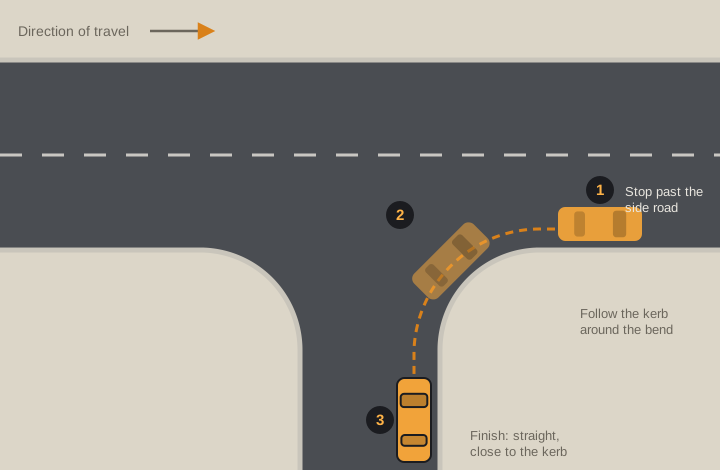
-
Look at the corner as you pass
As you drive past the side road, check how sharp the corner is and whether there are obstructions, parked cars or pedestrians.
-
Stop past the side road
Stop close to and parallel with the kerb, about two car lengths past the corner.
-
Reverse slowly in a straight line
Check all around, including your blind spots. Reverse slowly, looking mainly through the rear window and glancing at your mirrors.
-
Start steering at the curve
When your rear wheels reach the point where the kerb starts to curve, begin steering towards the kerb. A common cue is when the kerb appears to bend away in your kerb-side mirror.
Tip: Steer too early and you will hit the kerb. Too late and you will swing wide into the side road.
-
Follow the kerb around the bend
Adjust the steering to keep the same distance from the kerb all the way round. Keep looking all around: the front of the car swings out into the main road as you turn.
-
Straighten and continue back
When the car lines up with the side road, straighten the steering. Continue reversing a few car lengths, close to and parallel with the kerb, then stop.
Common reversing around a corner mistakes (and how to fix them)
- Reversing too fastYou cannot adjust the steering in time. Keep to a slow walking pace or slower.
- Steering too earlyThe rear wheel hits or mounts the kerb. Wait until your rear wheels reach the curve.
- Steering too lateThe car swings wide, towards the other side of the side road. Start steering a little earlier next time.
- Not watching for trafficThe front swings out into the main road. If a car, cyclist or pedestrian approaches, stop and let them pass.
What do examiners look for?
Where this manoeuvre is tested, examiners generally look for three things. Control: a slow, steady speed. Observation: all-round checks and giving way to others. Accuracy: staying reasonably close to the kerb without hitting it, and finishing straight.
Frequently asked questions
How far from the kerb should I be when reversing around a corner?
Roughly the same distance as you started, and steady all the way round. Many learners aim for around half a metre. Exact expectations depend on your country’s test.
How far should I reverse into the side road?
Commonly about two to three car lengths past the corner, or as far as the examiner or instructor asks, finishing close to and parallel with the kerb.
What should I do if a car comes while I am reversing?
Stop and let it pass. If you are blocking the road, you may need to pull forwards to let traffic through, then start again.
Which way do I turn the wheel when reversing around a corner on the right?
Turn it to the right, towards the kerb, when your rear wheels reach the curve. Adjust it as you go to keep the same distance from the kerb.
Can I practise reversing around a corner online?
Yes. Parking Simulator is a free browser-based simulator with a side road junction where you can practise reversing around a corner, with feedback on how close you stayed to the kerb.