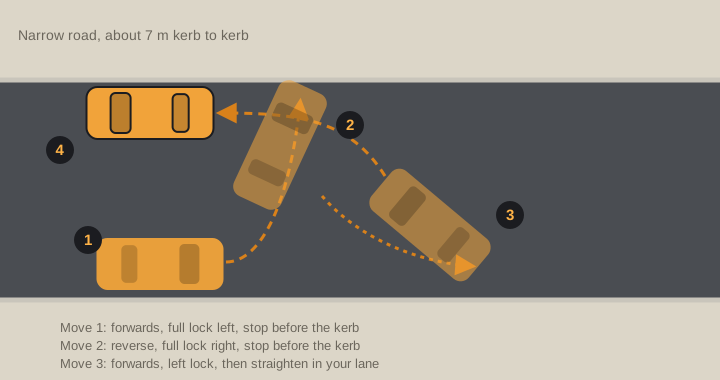
To do a three-point turn, stop on the right-hand side of the road and check all around. Drive forwards slowly with full lock to the left and stop before the far kerb. Reverse with full lock to the right, stopping before the kerb behind you. Then drive forwards with left lock, straighten and continue in your lane facing the other way. On a very narrow road it can take more than three moves, which is fine.
Key takeaways
- Choose a safe, quiet place with a good view in both directions.
- Move slowly but steer briskly.
- Stop before the kerb each time. Do not touch it.
- Look all around before every move.
- Three moves is ideal, but more are fine on a narrow road if you stay in control.
What is a three-point turn?
A three-point turn is a way to turn your car round to face the opposite direction using three moves: forwards, backwards and forwards again. It is used when the road is too narrow to turn round in one go. This guide is for countries that drive on the right; in countries that drive on the left, everything is mirrored.
Is the three-point turn still on the driving test?
It depends on where you take your test. The UK removed the turn in the road from its practical test in December 2017, but it is still a useful skill. Some US states still include a three-point turn (K-turn) in their road test. Check your local driving authority.
How to do a three-point turn, step by step
These steps assume you drive on the right. The diagram shows the four positions.
-
Choose a safe place and prepare
Pull up on the right-hand side of a quiet road with a good view in both directions, away from bends and junctions. Check all around, including your blind spots.
-
Move 1: forwards on full left lock
Move off slowly, turning the steering fully to the left. Just before you reach the far kerb, turn the wheel to the right as you stop, so you are ready for the next move.
Tip: Turning the wheel while the car is completely stationary is called dry steering. Many instructors discourage it because it wears the tyres.
-
Move 2: reverse on full right lock
Look all around, especially behind you, then reverse slowly with full right lock. Just before the kerb behind you, turn the wheel to the left as you stop.
-
Move 3: forwards with left lock
Check all around again, then drive forwards with left lock until the car points along the road.
-
Straighten and drive on
Straighten the steering and continue in your lane, now facing the opposite direction.
Common three-point turn mistakes (and how to fix them)
- Touching or mounting the kerbMove slowly and stop before the kerb each time. It is better to take an extra move than to hit it.
- Not looking before each moveTraffic can approach from either direction. Check all around before every move, and wait if anyone is coming.
- Moving too fastYou run out of room to steer. Keep the car slow and steer briskly.
- Choosing an unsafe placeAvoid bends, hills, junctions and busy roads where other drivers cannot see you in time.
What do examiners look for?
Where it is tested, examiners generally look for good control, thorough all-round observation before each move, and not touching the kerbs. Taking more than three moves on a narrow road is usually acceptable if the manoeuvre is controlled and safe.
Frequently asked questions
What is the difference between a three-point turn and a U-turn?
A U-turn turns the car round in one continuous movement and needs a wide road. A three-point turn uses forward and reverse moves when the road is too narrow for a U-turn.
How many moves are allowed in a three-point turn?
Three is ideal, but on a narrow road more moves are usually fine as long as you stay in control, keep observing and do not hit the kerbs.
Where should I do a three-point turn?
On a quiet road with a good view in both directions, away from bends, hills and junctions, and only where it is legal and safe.
Is a three-point turn the same as a K-turn or a turn in the road?
Yes. They are different names for the same manoeuvre.
Can I practise a three-point turn online?
Yes. Parking Simulator is a free browser-based simulator with a narrow road where you can practise turning in the road, with a score and a count of your forward and reverse moves.